How Well Do You Listen to Your Teen? (Answer My 6-Question Connection Checklist to Find Out…)

My Connection Checklist takes literally a few seconds to answer, but will give you lots of valuable information and insights about how effectively you listen to your teen.
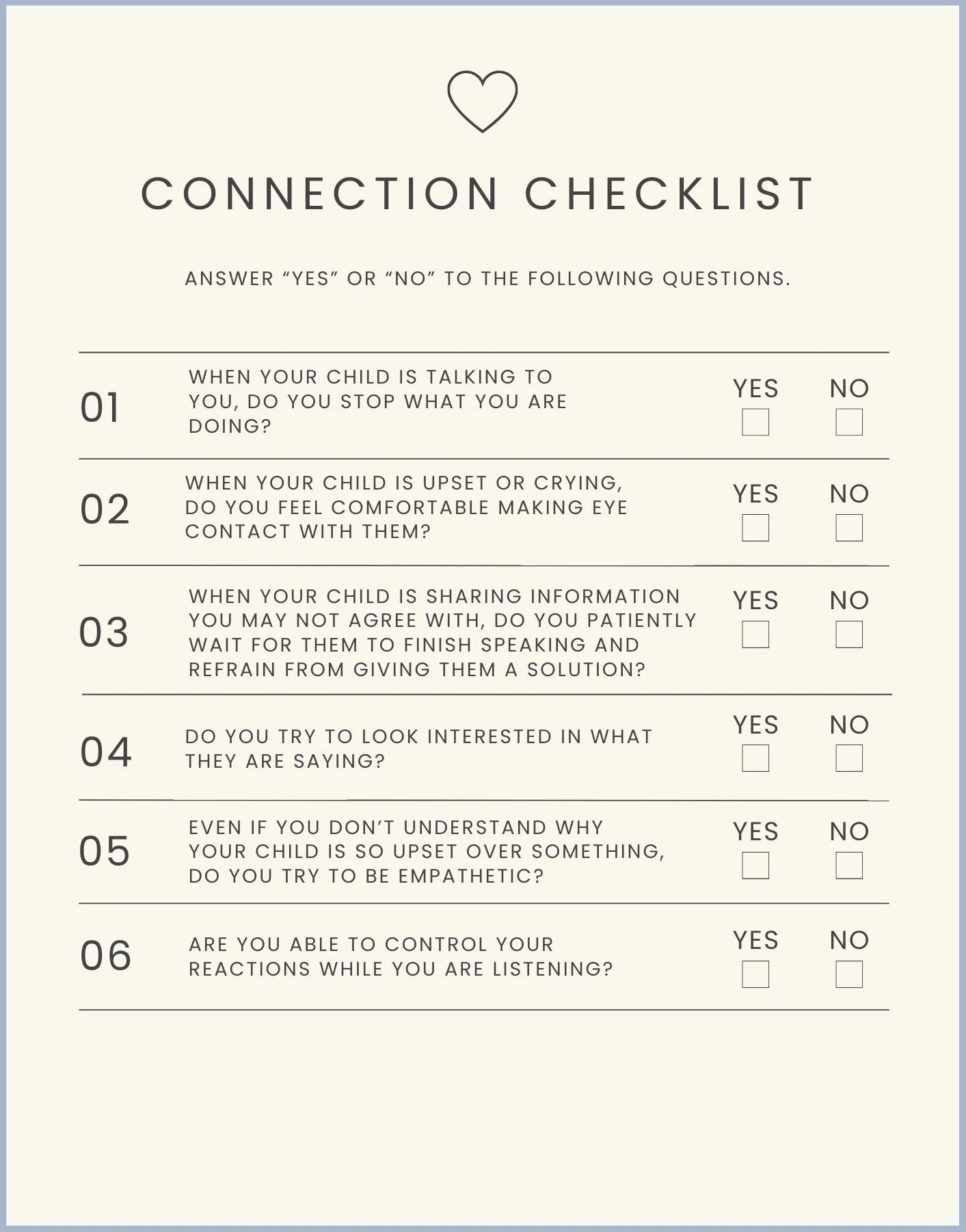
If you answered “NO” to any of these, it’s ok.
Listening is difficult, especially now in an age when we have so many things to do and so many distractions coming our way.
I created this checklist to help you gage what areas you may need a little help in to connect better with your child.
My top 5 tips to help you improve your active listening skills:
1. RECIEVE
How you receive the information your child is giving you is key. Stop what you’re doing and turn your body physically towards your child, make eye contact, and fully listen to what they’re saying. This is also the moment to eliminate any distractions.

Dedicating 2 minutes of undivided attention to your child may have a greater positive effect than listening to them for 1 hour as you simultaneously try to answer emails.
2. UNDERSTAND
Try to understand their feelings and actions even if you don't agree. Put yourself in their shoes and remember what it was like being a teen. For example, if your teen comes home crushed because their boyfriend broke up with them, try to think about how you felt during your first breakup.
3. REMEMBER
This is where you try to search your memory for previous times you have listened to your child and connect events or facts they have told you to their current situation. For example, if they share how upset they are about being excluded from a peer’s birthday party, try to think back about another moment when your child felt excluded and how they overcame the situation. Connect both events, this will help them feel listened to, validated, and like their feelings matter to you.
4. EVALUATE
Think about the words they’re sharing with you. For example, if your child tells you they’re being bullied on social media and you’re not sure how online bullying occurs, ask them to explain it to you, so you can better understand what they’re experiencing.
5. RESPOND
Ask them what they need from you at that moment. A simple “Im here, how can I help?” will go a long way.
Experiment and see which skills feel most comfortable for you.
Above all, remember your relationship with your child can feel easy and carefree. Take things one step at a time and don’t be too hard on yourself as you put these skills into practice. It takes time to hone them.
Even if you only put one of these skills into practice, it’s still a step in the right direction towards strengthening the bond with your child.