10 Tips for Connecting With Your Child When You See them Struggling

Do any of these scenarios sound familiar?
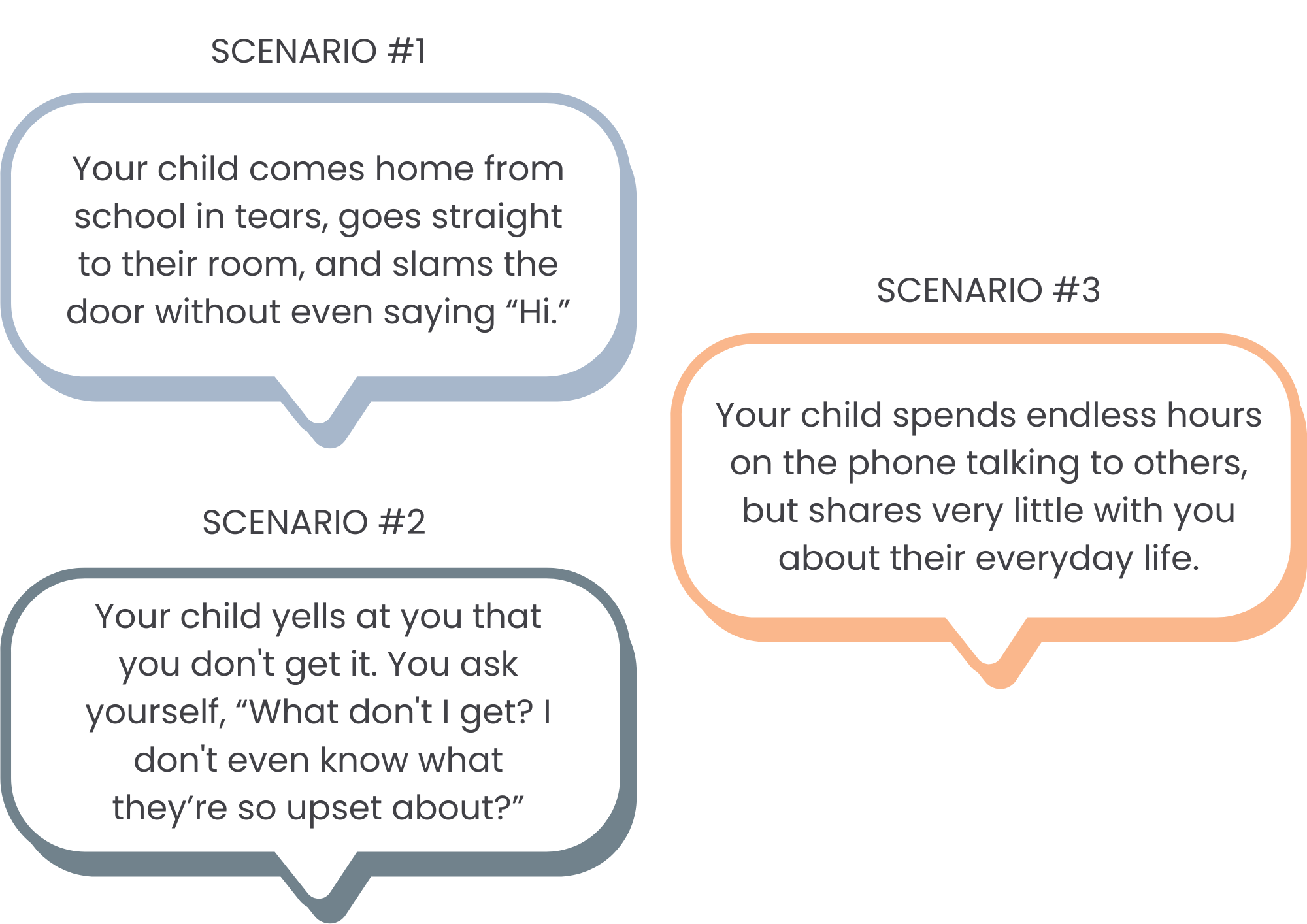
Do you feel like you want to be there for your child and show them your support but you just don't know how?
If yes, let me give you some easy steps you can follow to listen to them next time you see them struggling.
The first thing to do to connect with your child is to think about the conversation you’re about to have as one you would have with a friend, not as a parent ready to lecture or an adult providing solutions to a child.
Once you feel like you have created that mindset, get close to them physically, and follow these tips. See what works for you and feels genuine.
10 Tips for Connecting With Your Child When You See them Struggling
FACE YOUR CHILD
Literally turn your entire body towards your child to provide them with the sensation that you’re present and ready for anything they may want to share with you.
MAKE EYE CONTACT
Any eye contact on your part is better than none.
BE INTENTIONAL ABOUT YOUR POSTURE
If your child is slouched across the kitchen counter try not to ask them to sit up, simply pull up a stool and effortlessly sit with your arms across the counter as well, mirroring your child’s posture will allow them to feel like they can relax in your presence.
ASK OPEN-ENDED QUESTIONS
As they start to provide you with some sort of information about their current situation or state of mind, focus on making open-ended questions so that they have the opportunity to think and verbalize more. Try not to ask questions that require a simple yes or no answer because this will lead to a one-sided conversation.
NOD
If you don't know what to say as you listen to them, simply nod your head. Try to be authentic while listening. Don't just sit and stare, genuinely express your empathy and understanding through head nodding or other body gestures such as a smile.
LOOK INTERESTED
At first it may be difficult because they may be talking 50,000 miles an hour or they may be giving you one word sentences, but try to make them feel like their words are the only thing you care about in that moment. This will create an instant sense of connection
FOCUS AND ADD TO THE CONVERSATION
Once your child starts talking, try to truly focus on what is being said. If possible add something into the conversation that makes you prove to your child that you remember past conversations. This will make them feel valued.
REPEAT
Repeat back what you heard in your own words, so that they can confirm that you understood correctly
DON’T REACT
If you can only follow one of these tips, follow this one! Don’t react as they speak. Try to keep your feelings in check while they talk. This is the hardest skill, but I promise, if you don’t interrupt your child or tell them what you think they should do, they will value your presence much more. The fact that they’re choosing you to vent with is a privilege, so don’t take that time for granted.
RESPOND
When you sense that they’ve finished telling you what’s going on or if there are moments of silence, respond by asking them, “Do you want my advice or do you simply need me to listen right now?” Giving them the option will help them feel like you are on their side and want what's best for them.
Try out some of these suggestions next time you see your teen in need of some company and see what feels natural to you.

Remember that knowing how to listen is a skill that can be learned, so don’t be too hard on yourself when it feels uncomfortable.
The goal is to try to listen more attentively, so that your teen feels like they can rely on you.