The Art of Listening

“I’ve learned that people will forget what you said, people will forget what you did, but people will never forget how you made them feel.”
— Maya Angelou
Why is Listening Important?
Listening matters.
Listening enhances your ability to understand your child and makes you a better communicator.
Knowing how to listen mindfully makes your child’s experience of speaking with you more enjoyable.
Most of us have a genuine desire and need to get along with our children and we yearn to develop positive connections with them. Active listening helps us achieve this.
The gift of time, your time, makes your child feel they’re important to you.
When we have difficult and emotionally charged conversations, it can be intimidating to listen, but rather than running away from our feelings as our child speaks to us, let me encourage you to step up and listen.

Active listening helps you:
Learn and understand what your child is going through better
Relate more positively to one another
Feel what your child is feeling
Connect and strengthen the bond you have with your child
Listening is often something we take for granted.
Yes, we do hear the words that others say to us, but do we truly listen to what they’re saying? Do we understand what they’re trying to transmit to us through their words?
There are substantiated reports of research from Florida State University and Michigan State University1 stating that immediately after the average person has listened to someone talk, he remembers only about half of what he has heard.

It’s common that people often hear what’s being said, but hearing is a lot different than listening.
In order to actively listen, we need to know how to take in what someone is telling us, think about it, and understand it.
Some of the reasons we don’t actively listen are that we’re:
Thinking about something else while our child speaks to us
Wrapped up in our own thoughts
Distracted by our cell phone
Hearing your child share their situation and automatically thinking about a solution while they speak to us
In disagreement with what they’re telling us
Listening must begin from a place of honesty and curiosity. Be honest with yourself next time your child shares something with you. What state of mind are you in? Are you fully present or are you distracted with your own problems? Our state of mind can negatively impact our ability to listen, so next time your child needs your ear, stop and think about what distracts you from being able to give them your full attention.
Try to approach a listening situation with a desire to learn. You can be curious about what they’re telling you without having to adopt their thought pattern or agree with them. By listening you can consider another point of view, which is a good reason, in and of itself, to share with others.
When you listen, your goal shouldn’t be to determine whether you agree or disagree with your child.
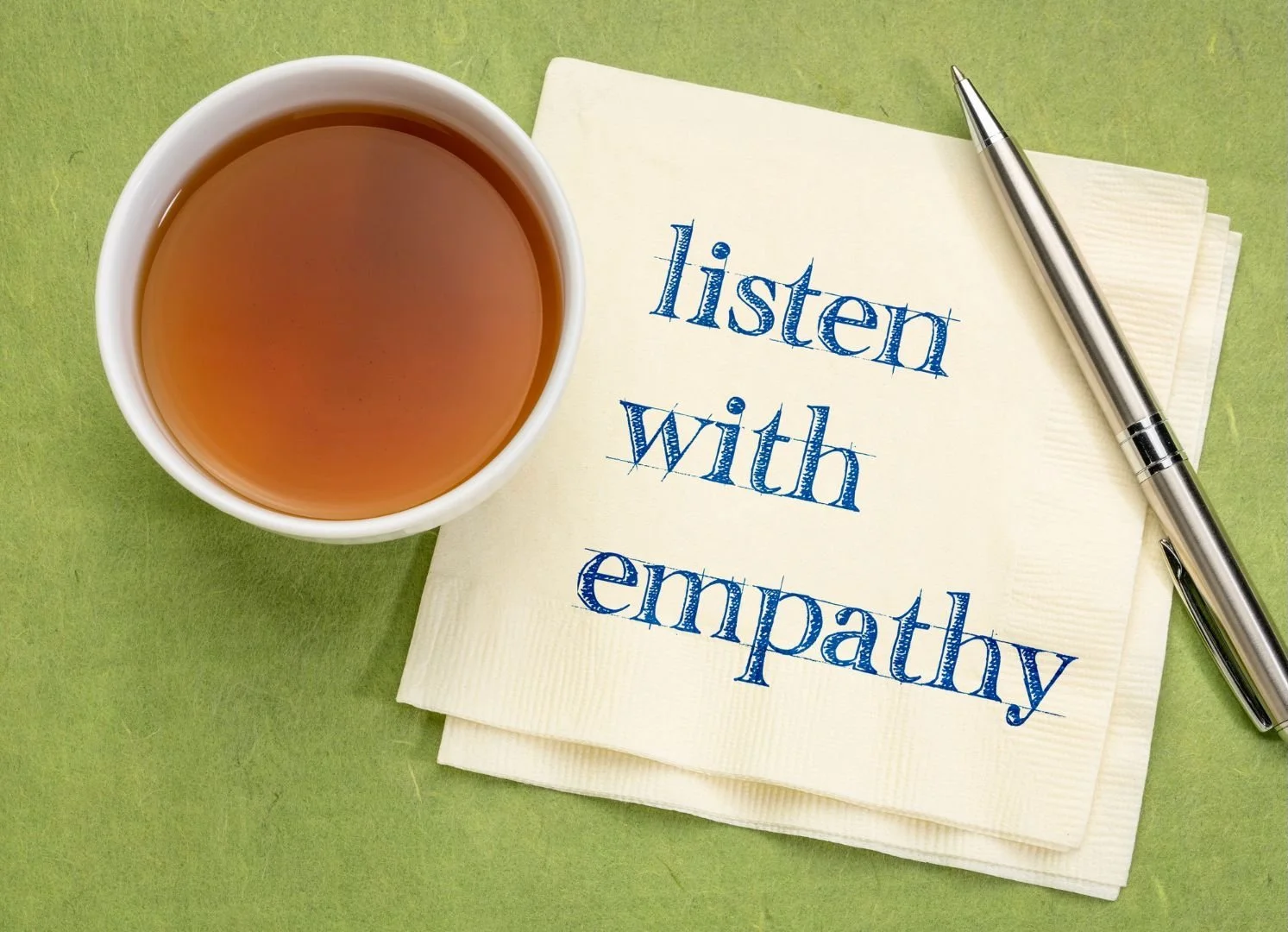
Your goal should be to listen and understand.
What you do with the newly acquired knowledge is not a priority at that point. You have the choice to decide what to do with the information after.
Be empathetic. Remember the example we were told as kids about putting our feet in someone else’s shoes to feel their feelings? Try to feel what it’s like to be in your child’s shoes. Your child’s feelings won’t become your feelings, they will simply give you a different perspective.
The goal here is to listen attentively and actively, so you can UNDERSTAND what you’re being told. Once you have a better understanding of their situation, it will be a lot easier to be empathetic and spend time with your child creating a deeper sense of connection.
Harvard Business Review. Listening to People by Ralph G. Nichols and Leonard A. Stevens. https://hbr.org/1957/09/listening-to-people